
Buying Guides
How to Calculate Packaging Cost per Cake (with free formula)
A simple formula for packaging cost per cake: itemize every box, board and liner, add freight and waste, see a worked 8-inch cake example — and keep packaging under 8% of your price.
Why Packaging Cost Decides Your Margin
Bakers plan recipes to the gram and price flour to the cent — then grab whatever box is on the shelf and hand the cake over. Packaging is the only ingredient in your price that the cake never touches, and it quietly decides whether a busy order calendar actually makes money. A cake that sells for $45 can carry anywhere from $0.90 to $3.50 of packaging. Multiply that by 80 cakes a month and the difference is a full month of flour.
This guide gives you a simple, repeatable formula — the same cost logic professional packaging buyers use — plus a worked example you can copy for your own menu.
The Packaging Cost per Cake Formula
Packaging cost per cake = (A + B + C) ÷ usable units
- A = every item the cake leaves with — box, board, liner, sticker, ribbon, bag
- B = inbound freight and storage share — what you paid to get the packaging to your kitchen
- C = waste allowance — crushed corners, mis-prints, water damage: budget 3–5%
- Usable units — what actually arrives undamaged and usable, not what you ordered
Most bakers only count A. The formula exists because B and C typically add 10–20% on top of the invoice price — that is the gap between thinking you spend $2.00 per cake and actually spending $2.40.
Step 1: Itemize Everything the Cake Leaves With
Write the list once, per menu item. A celebration cake typically leaves with six things:
- The box — sized correctly: 2 inches larger than the cake, with height headroom (start from a proper cake box size chart)
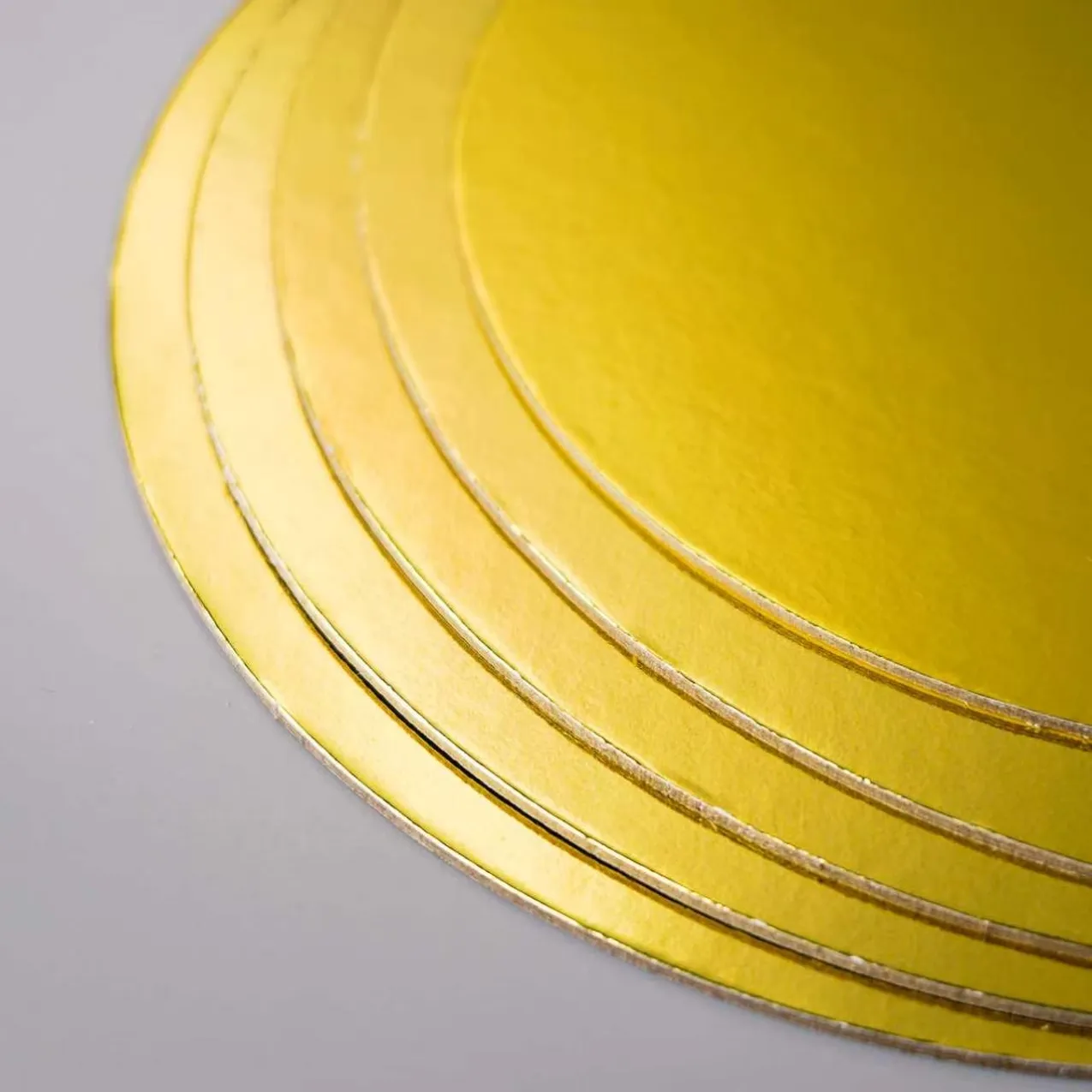
- The board or drum — a thin board for light cakes, a 12mm drum for heavy or tiered ones; the price gap is real, so match the cake, not the habit (see cake boards vs. cake drums)
- Greaseproof liner — only where the recipe stains: butter cakes, cheesecakes, cream-filled (which cakes need greaseproof boxes)
- Branding — sticker or ribbon: $0.03–0.10 per order at small quantities
- Closure & extras — tape, carry bag, candle kit if you include one
- Delivery-only items — anti-slip mat,fragile stickers, outer carton for couriered orders (count these into delivery orders, not pickup: choosing delivery-grade boxes)
Step 2: Use Landed Cost, Not the Price on the Invoice
The number on the supplier's quotation is not your cost. Your cost is the landed cost:
Landed unit cost = (product price + inbound freight + duties/fees) ÷ pieces received
If you buy 1,000 boxes at $0.48 and pay $60 shipping to your door, one box does not cost $0.48 — it costs ($480 + $60) ÷ 1,000 = $0.54. Buying retail packs from a craft store? The store already added that margin for you — usually 2–4× the manufacturing price.
Step 3: Price In Waste and MOQ Tiers
Add a waste line before you divide: if 3% of a 1,000-pc order arrives crushed, you paid for 1,000 and sell with 970. Good suppliers replace damaged goods — ask before ordering, and your C line drops.
Then look at how quantity moves the price. Packaging is a classic tiered product — every MOQ breakpoint cuts the unit cost:
10" kraft window box — example tiers | Unit price (USD) | Per 100 cakes you spend |
|---|---|---|
Retail pack (50 pcs) | $0.95 | $95 |
500 pcs — factory direct | $0.62 | $62 |
1,000 pcs — factory direct | $0.48 | $48 |
5,000 pcs — custom printed | $0.36 | $36 |
Same box, same factory — the only variable is order size. Material choice moves the number further: corrugated costs more than duplex, duplex more than kraft (material comparison), and a window adds a little (window vs. plain). None of these are "expensive" or "cheap" in isolation — they are only correct or incorrect for your price point.
Worked Example: 8″ Celebration Cake ($45 selling price)
One menu item, two sourcing routes, same item list:
Item | Retail-sourced | Factory-direct (1,000 pcs) |
|---|---|---|
10" window cake box | $0.95 | $0.48 |
10" cake board | $0.45 | $0.18 |
Greaseproof liner | $0.08 | $0.04 |
Logo sticker + ribbon | $0.25 | $0.06 |
Carry bag + tape | $0.30 | $0.09 |
Subtotal (A) | $2.03 | $0.85 |
Freight-in & storage (B, +10%) | included in retail | $0.09 |
Waste (C, +3%) | $0.06 | $0.03 |
Packaging cost per cake | $2.09 | $0.97 |
% of the $45 cake price | 4.6% | 2.2% |
Run the same table for your best-seller and you will likely find one of two things: your packaging is fine — or one line item is quietly doubling your cost (usually the retail-sourced box).
Cupcakes and Mixed Orders: Divide Honestly
- Cupcake boxes with inserts are a different math: a 6-cup box + insert might cost $0.55 factory-direct, but each cupcake only carries $0.09 of packaging — the box is shared, the insert is per-cupcake (cupcake box guide)
- On a $3.50 cupcake, $0.35 of packaging is 10% — the smaller the item, the bigger packaging's share, so bulk tiers matter MORE for small items
- Mixed orders: count every item that leaves the door, divide by the order total, and keep the percentage visible on your order form
Turn the Number into Pricing: the 5–8% Rule
- Celebration cakes: keep packaging at 5–8% of the selling price. Above 8%, either the price is too low or the packaging is too rich for this product
- Everyday items (cupcakes, cookies, pastries): 8–15% is normal — volume products live on thinner margins and cheaper per-unit packaging
- Luxury/gift lines can run 15–25% — there the packaging IS part of the product, and rigid boxes or printed gift boxes pay for themselves in the price premium
5 Ways to Cut Packaging Cost Without Cutting Quality
- Consolidate sizes. Five box sizes means five MOQs you never reach. Two well-chosen sizes cover most menus (the home bakery checklist shows the minimum set)
- Jump one MOQ tier on your best-seller only. Do not bulk-buy slow movers to chase a discount — the savings die in storage
- Buy boards and boxes from one supplier. One freight-in charge (B) instead of two, and mixed-container quotes get sharper (buying boards in bulk)
- Standardize on kraft. It hides grease, reads premium, and usually undercuts white duplex — and it is the eco-story your customers already want
- Plan seasonal prints once a year, in September. Holiday stock bought in-season is retail-priced (holiday packaging planning)
The Formula, One Last Time
(All items + freight-in + waste) ÷ usable units = your true packaging cost per cake. Run it once per menu item, write the result on your price sheet, and re-run it whenever a supplier quote or your MOQ tier changes. If your current number sits above the 5–8% band, the fastest fix is not a cheaper box — it is a bigger order of the right box.
We manufacture cake boxes, boards and drums with MOQs from 50–1,000 pcs — send us your item list and we will quote the whole basket in 24 hours, so column three of the table above becomes your number.
